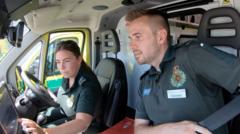
During an extended period of high temperatures across the United Kingdom, BBC News accompanied an ambulance crew operating out of Exeter to document the pressures that sustained heat places on emergency services. The report framed the event as one of the country's longest-running heatwaves in recent memory.
A Strain on Emergency Responders
The Exeter crew's experience, as reported by the BBC, reflected a broader pattern seen when prolonged heat settles over regions unaccustomed to it. Emergency services in such conditions typically encounter a rise in calls related to heat exposure, dehydration, and the worsening of pre-existing conditions — though the BBC report did not publish specific call-volume figures.
What emerged most clearly from the account was a theme of public unawareness. As one speaker referenced in the report put it:
People don't realise how at risk they are
That observation points to a gap between how dangerous sustained heat can be and how seriously the general public tends to take it, particularly in a country where extreme warmth remains relatively uncommon.
Why the UK Is Particularly Vulnerable
The United Kingdom's built environment and cultural habits have historically been oriented toward retaining warmth rather than managing excess heat. Older housing stock, limited air conditioning in homes and public spaces, and a general unfamiliarity with heat-health precautions can all contribute to elevated risk during unusual temperature spikes.
Public health researchers have noted in previous studies that heat-related mortality in temperate countries often exceeds that seen in hotter climates, partly because populations in cooler regions have lower physiological and behavioural adaptation to extreme warmth. The BBC's on-the-ground account from Exeter appears consistent with that broader picture, even if the report itself focused on the human experience rather than epidemiological data.
The Broader Context
The report did not detail the specific types of incidents the Exeter crew attended, nor did it provide statistics on call volumes or patient outcomes during the heatwave period. Nevertheless, the framing — an ambulance service visibly stretched, responding to a public that may not fully appreciate its own exposure — underscores a recurring concern among emergency health professionals when temperatures climb.
The full BBC News report is available at bbc.co.uk.