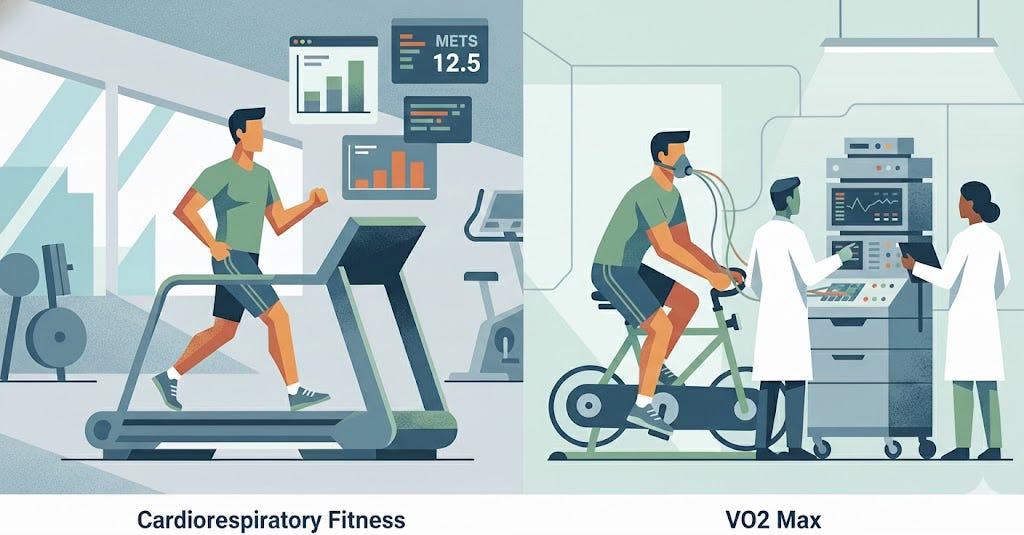
VO2 max — the measure of how efficiently the body uses oxygen during intense exercise — has become one of the most talked-about numbers in performance and longevity circles. Wearable devices now estimate it automatically, and it has been widely promoted as a window into overall cardiovascular health. But a developing line of critique is beginning to challenge whether that reputation is fully deserved.
A Metric Under the Microscope
The central concern, as it is emerging in specialist commentary, is one of conflation. VO2 max is a specific physiological measurement, yet it is increasingly being treated as though it were synonymous with the much broader concept of cardiorespiratory fitness. Those two things overlap, the argument goes, but they are not the same — and treating them as interchangeable risks misleading both researchers and the general public.
Cardiorespiratory fitness encompasses a range of adaptations: how the heart, lungs, blood vessels, and muscles coordinate under sustained physical demand. VO2 max captures one dimension of that picture, but critics suggest it may not capture the whole story, particularly when derived from consumer-grade devices rather than controlled laboratory conditions.
What the Debate Signals
If the critique gains traction, the implications for how fitness is assessed and communicated could be significant. A recalibration of how much weight a single number should carry — and how accurately it can be measured outside clinical settings — would affect everything from how athletic training is structured to how population-level health data is interpreted.
The story is still developing. No consensus has formed, and the broader scientific community has not yet formally weighed in on the specific claims being advanced. What is clear is that the conversation around fitness metrics is becoming more nuanced, with growing appetite for scrutiny of tools that have, until recently, enjoyed relatively uncritical mainstream adoption.
A Broader Pattern
This is not the first time a popular health metric has attracted pushback after a period of rapid uptake. The pattern — enthusiastic adoption followed by methodological questioning — is familiar in performance science, and it often leads to more refined, rather than abandoned, use of the measure in question. Whether VO2 max follows that trajectory remains to be seen.